Document Processing
Extracting structured data from invoices, contracts, forms and PDFs that currently get retyped
AI app development, Australia wide. The AI projects that work start with an expensive, repetitive task and ask whether a model can do it. Devika builds AI applications that survive contact with real users, real costs and real compliance.
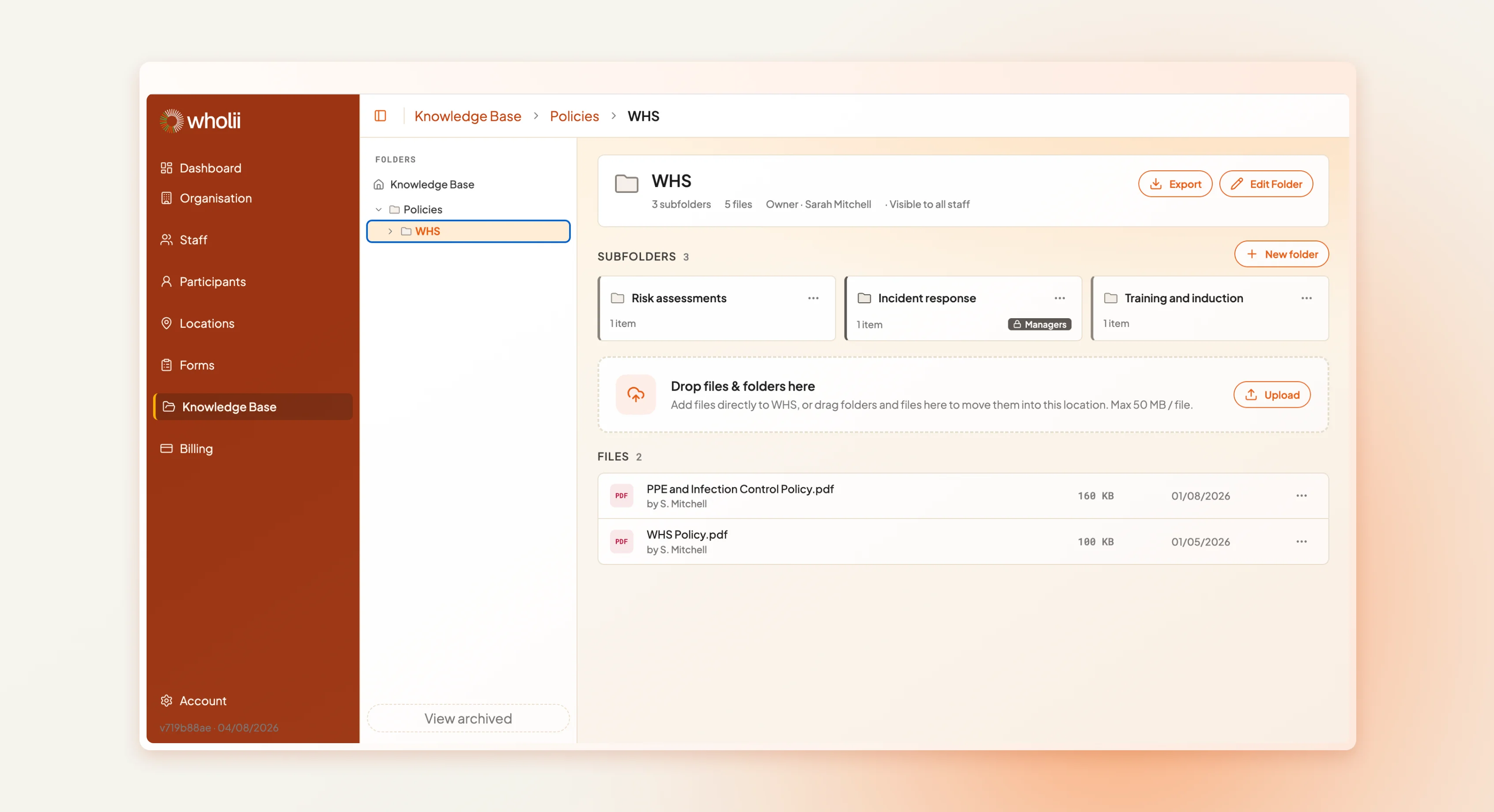
Wholii. NDIS compliance, generative AI on AWS.
Read the Case Study →
A team starts with the technology, goes looking for somewhere to apply it, and ships a chatbot nobody asked for. Six months later the enthusiasm is gone and the invoice is not.
The projects that work start at the other end. They begin with a task that is expensive, repetitive and currently done by a person who would rather be doing something else. Then they ask whether a model can do that task well enough, and what happens on the occasions when it cannot.
That second question separates a demo from a product. We start with the workflow every time.
Do not start with the AI. Start with the task nobody wants to do, then ask whether AI can do it.
You will hear these used interchangeably. They are not the same thing.
A system that learns patterns from your historical data and applies them to new cases. Fraud detection, demand forecasting, matching candidates to roles, predicting which customers are about to leave. Machine learning apps are the right tool when you have data and want a prediction or a ranking.
Models that produce new content: text, images, code, structured summaries. Generative AI apps are the right tool when you want something drafted, summarised, classified or explained.
The class of model behind most generative AI. It predicts likely text with remarkable fluency. Fluency is not accuracy, which is why the design around it matters more than the model choice.
Before answering, the system retrieves relevant passages from your documents and instructs the model to answer from those. This is the standard pattern for an AI that knows our business, and it is the difference between a system that cites your policy manual and one that invents a plausible-sounding policy.
An AI given tools and permission to take multi-step actions rather than just producing text. Powerful, and the point at which permissions and audit logging stop being optional.
A person reviews or approves before the output has consequences. The single most reliable safeguard in production AI, and the one most often cut for speed.
Machine learning predicts. Generative AI drafts. RAG makes it answer from your documents instead of from the internet. A human in the loop stops the confident wrong answers from reaching a customer.
Patterns we see returning value quickly.
Extracting structured data from invoices, contracts, forms and PDFs that currently get retyped
Employees asking questions of your own documentation and getting sourced answers
Classifying inbound enquiries, tickets or applications so the right person sees them first
Connecting supply and demand where the criteria are too nuanced for a filter
First-pass responses, reports and summaries a person edits rather than writes
Tailoring what each user sees based on their behaviour and goals, informed by real usage data
AI is worth it where a fast rough answer that someone checks beats a slow perfect one.
Notice the common shape. Each takes a task that already happens, is already expensive, and where being roughly right and quickly checkable beats being slow and perfect.
AI software development at Devika follows a deliberately short first loop. Our AI app development services and custom AI application development engagements start the same way, whether the end product is a feature inside something you already run or a system of its own.
We list candidate tasks, score them on value, feasibility and risk, and pick one. One, not five.
Real data, real prompts, real evaluation. We measure accuracy against a set of cases you agree represent the job, and we report the number whether or not it flatters us. If it does not clear the bar, you find out before you have spent a build budget.
This is where most of the work sits, and where most AI projects underinvest. Retrieval, evaluation harnesses, guardrails, fallback behaviour, cost controls, monitoring, and the interface that makes the output usable rather than merely available. It is the same discipline as our custom software development work, applied to a probabilistic component.
AWS, as an AWS Partner, with clear boundaries on where your data goes and which models see it, documented before build rather than after. Onshore delivery throughout, with data in Australian regions by default.
Model behaviour drifts and providers change underneath you. AI systems need active ownership rather than a handover, which is why most AI engagements move into managed support at launch.
The model is maybe 20 per cent of an AI product. The other 80 per cent is making it reliable, affordable and usable, and that 80 per cent is normal software engineering, which we have been doing for a decade.
The questions a board or risk committee will ask, answered before they ask them.
Documented per system. Options range from models running inside your own AWS account to commercial APIs under contractual no-training terms. We write down which components see which data classes.
Australian AWS regions by default. Where a model provider cannot meet that, we say so before you commit rather than after.
Every AI-assisted decision that has consequences is logged with its inputs, its output and the human who approved it.
A held-out test set agreed with you, run before every release, so quality regressions are caught rather than discovered by customers.
Defined thresholds for what routes to a person, and a defined person.
We can map controls to Australia’s AI Ethics Principles and the NIST AI Risk Management Framework where your governance process expects it.
If you are a founder, the pressure to have an AI story is real and mostly unhelpful. Two things are worth knowing.
You are using the same models as everyone else. What is yours is proprietary data, workflow ownership, distribution, and the accumulated judgement encoded in how your product handles edge cases.
An AI feature costing $0.40 per user per day inside a $15 monthly subscription is a business model that does not close. We model cost per user during the proof of concept, alongside your burn rate, before it becomes a surprise.
Everyone has the same models. Your moat is your data, your workflow and your distribution.
Our AI work for startups runs on the same rapid MVP process as the rest of our engineering.
We have been building intelligent and emerging-technology products since well before the current wave.
A compliance and workflow platform for NDIS providers, built out of one provider’s hard-won internal process and turned into multi-tenant SaaS for the sector. Staff capture information by talking. Amazon Transcribe handles voice intake with NDIS-specific vocabulary, Amazon Textract reads uploaded forms, and Amazon Bedrock drafts form templates and structured responses from documents and transcripts.
Every suggestion is reviewed and accepted by a person before a record is finalised, which is human in the loop working exactly as described above rather than as a principle. A 6-month MVP on Baseline, preceded by a proof of concept and followed by ongoing managed services.
“Onboarding a participant used to take two or three days.”
An hour of conversation now produces the care plan, the service agreement and the audit evidence, formatted the way an auditor expects to see it.
Read the Case Study →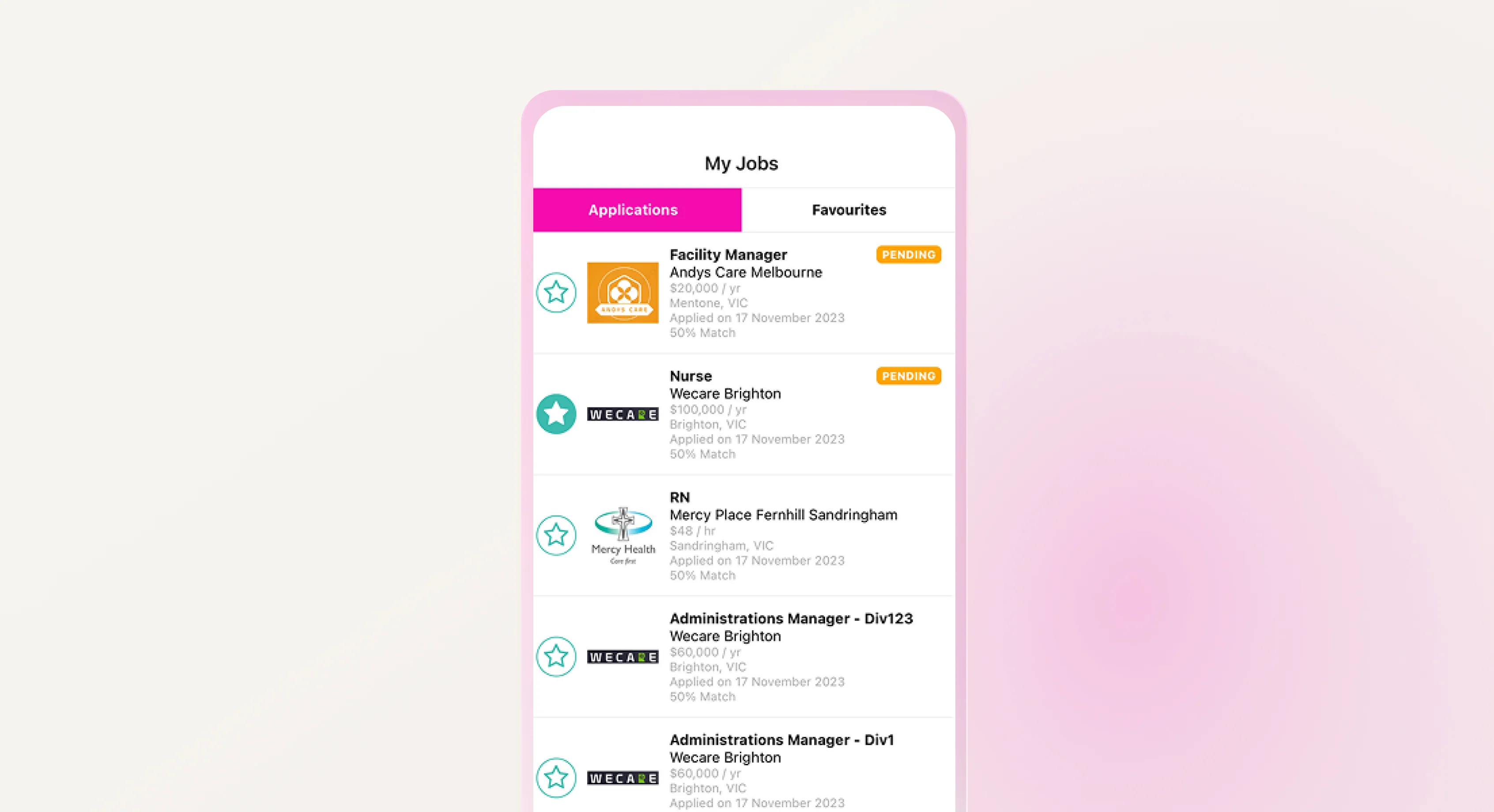
A platform tackling Australia’s aged care workforce shortage. The core of the product is a matching system that connects healthcare employers with suitably qualified candidates in a sector that had been slow to adopt technology at all. Devika built it on Baseline, then Devika Ventures invested in the business.
Read the Case Study →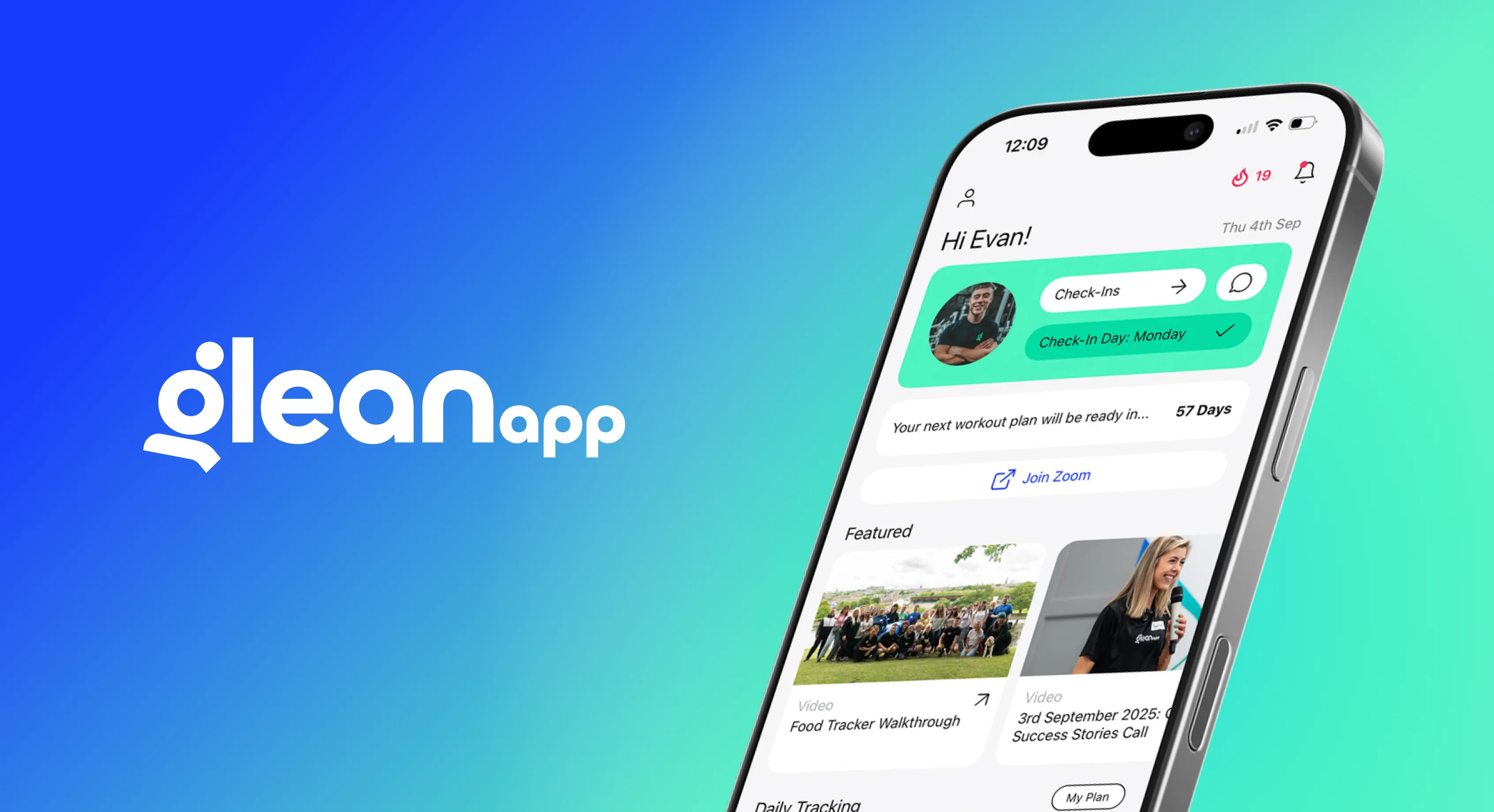
A platform delivering individualised plans at scale, accounting for each user’s lifestyle, preferences and goals, across web and mobile with coach and admin portals on AWS. Personalisation engineering applied to a business that could not otherwise have scaled past its founders’ available hours.
Read the Case Study →
Collaborative city planning in AR, built with React Native and Apple ARKit, letting residents project design proposals onto real landscapes. Tested with Wollongong City Council, Liverpool City Council and City of Canterbury Bankstown.
Read the Case Study →Wholii is generative AI in production, in a regulated sector, where a wrong answer has consequences and an auditor eventually reads the output. That is the hardest version of this work, and it is the reference we would point you to.
It is also recent, because the models that make it possible are recent. We will not claim a decade of generative AI experience that nobody in this industry has. What we bring is ten years of shipping emerging technology into production and the engineering discipline that turns a working model into a product that survives contact with customers.
For machine learning, generally yes. For generative AI, often no. Retrieval lets a model answer from your existing documents without any training. If your knowledge lives in PDFs and wikis, you have more to work with than you think.
That is a design decision we make with you and document before build. Options range from models running inside your own AWS environment to commercial APIs with contractual no-training guarantees. Australian regions and onshore delivery by default.
Retrieval grounds answers in your source documents. Evaluation against a held-out test set catches regressions before release. Confidence thresholds route uncertain cases to a person. And for anything consequential, human review before the output has effect.
Ongoing model costs are real and usage-based. We model cost per user during the proof of concept so the unit economics are known before you commit to a build.
Frequently the better move. A well-chosen AI feature inside a product people already use beats a new AI product nobody has heard of.
You have spent the smallest amount available to learn that, and you have a measured accuracy figure explaining why. We would rather deliver that result than a build you regret.
We will tell you whether AI is the answer, what it would take, and what it would cost to run.