Kolb Research to Reveal Benefits of Experiential Learning with VR
Exploring research on Devika Kolb's VR experiences, demonstrating how VR accommodates various learning styles to enhance education.
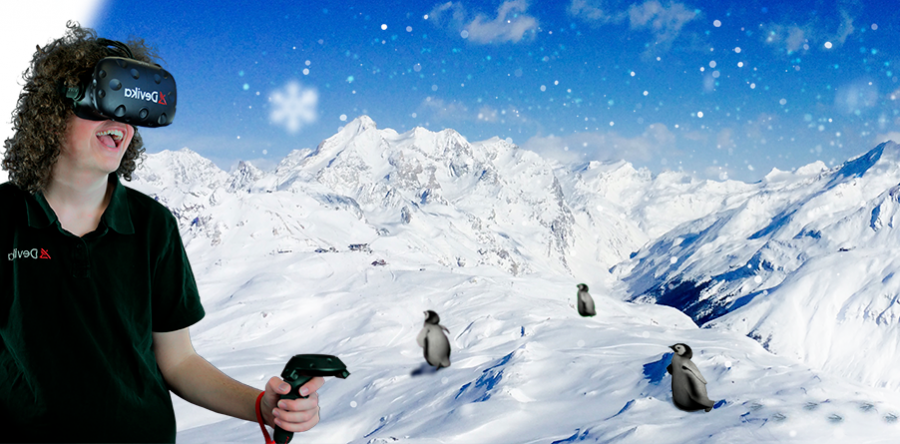
Virtual reality (VR) is making its way into the education stream and, while it is an exciting platform to use, its relative newness often results in hesitancy when it comes to adoption. To combat barriers to adoption, we’re taking Kolb to the classroom to better understand its effectiveness.
Research is being conducted by Dr. Shiva Pedram, a UX researcher at the SMART Infrastructure Facility University of Wollongong, to better understand experiential learning with VR. The mixed-method approach includes a sample of over 120 students in year 5-11 who attend schools across the Illawarra. Students’ participation included trying the Devika Kolb Antarctica Experience and completing a questionnaire.
Research Purpose and Data Collection
The two objectives of the research are to:
- Better understand whether students’ preferred learning styles affect their learning experience in VR and,
- Better understand students’ learning experiences in VR-based learning environments.
Data was collected via a questionnaire in three stages (before, during and after using VR). These include measuring pre-existing perceptions of VR, exposing students to VR learning experiences and assessing post-training problem-solving skills.
The Results
Findings of the research show that there is potential for Kolb to benefit high school students education. The key findings are;
- VR accommodates individuals regardless of their preferred learning style.
- The VR learning environment, Kolb, has features that support the design of learning tasks and can enhance students’ performance
- Students studying science would benefit from VR learning sessions that involve 3D thinking or are unable to be experienced first-hand and,
There are nine different learning styles (Kolb et al. 2014), which can make it difficult for teachers to cater to each student’s learning needs. The benefit of experiential learning, studied through the Kolb Antarctica Experience, is that VR accommodates each learning style. VR may therefore help educators cater to different students’ learning styles and pace.
If you would like a copy of the results, please contact us here.
More on Kolb
Kolb officially launched on 14 March 2018 and has been downloaded worldwide over 10 000 times. Kolb currently consists of one scenario, the Antarctica Experience, but was designed to host an array of scenarios that are all mapped to the high school learning curriculum.