Amazon Bedrock AI Model Benchmarks & Why They Matter
Explore AWS Bedrock's core benefits and key benchmarks to guide founders in selecting the right AI model for their products.
If you’re a non-technical founder curious about how AI can power your product, you may have heard of AWS Bedrock. For us at Devika, as an AWS partner, Bedrock offers a huge advantage: it’s like a “one-stop shop” for ready-made AI models.
Let’s dive into the core benefits of AWS Bedrock, why it’s great for founders, and which benchmarks matter most when selecting a model.
Why AWS Bedrock?
This has become a powerful service within software development as it allows developers access to a range of pre-built AI models, ready to be embedded into your applications. Some key benefits you need to know about are:
- Access to multiple models with different strengths and weaknesses depending on the use case.
- Easy switching between models (pre and post-development) for developers, if use case changes or performance is not up to scratch.
- Highly scalable, supporting your business as you grow!
Which Model do you Pick?
Assessing which model to use depends highly on the use case and several benchmarks. Even though developers make these decisions, understanding them as a founder is key to aligning tech choices with your business goals. What’s the right tool for the right job?
Here’s what we think are the most important benchmarks:
1. Pricing
Pricing is often a top consideration, especially for startups working with limited budgets. AWS Bedrock offers different cost structures:
- Per Token/Character: You pay based on the volume of text the model processes.
- Per Output: Each time the model generates a response, there’s a charge.
- Monthly Subscriptions: This option can work well for consistent and high-use scenarios.
Why It Matters: If your app requires high-frequency interactions, like a customer support chatbot, paying per output can quickly add up. In this case, you may want to select a model that has a lower price, but this will come at a cost in quality and speed! On the other hand, a pricier model might make sense for applications where high accuracy directly boosts your ROI.
2. Quality
When it comes to AI, quality means the accuracy, coherence, and relevance of the output. This is vital because reliable, contextually accurate responses improve user trust and overall satisfaction. Imagine the frustration with a chatbot giving confusing answers!
Why It Matters: High-quality models strengthen user engagement by consistently delivering accurate responses, but they may come at a higher cost or have slightly slower output speeds. For some applications, this trade-off is worth it, especially if the goal is to build a reputation for reliability. Conversely, if your use case is more forgiving, like generating social media content, then you might prioritize cost over precision.
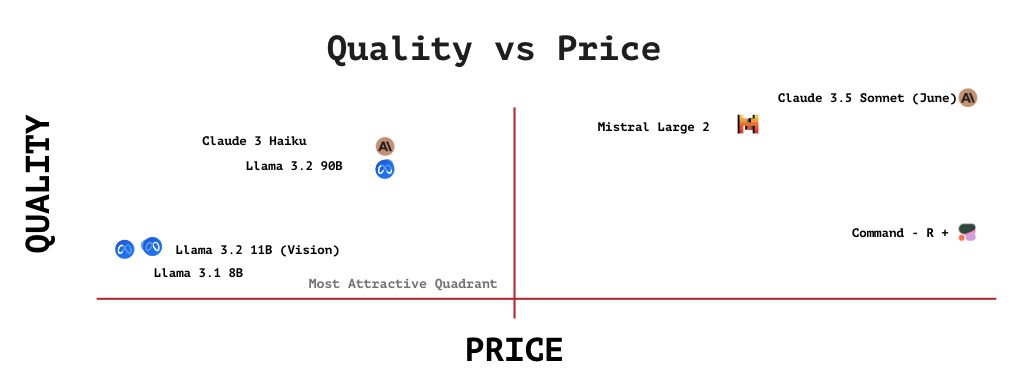
Above you can see how quality and price of an AI model are related. Claude 3 Haiku typically provides a good balance of quality and price, however particular applications may require higher or lower quality outputs.
3. Output Speed
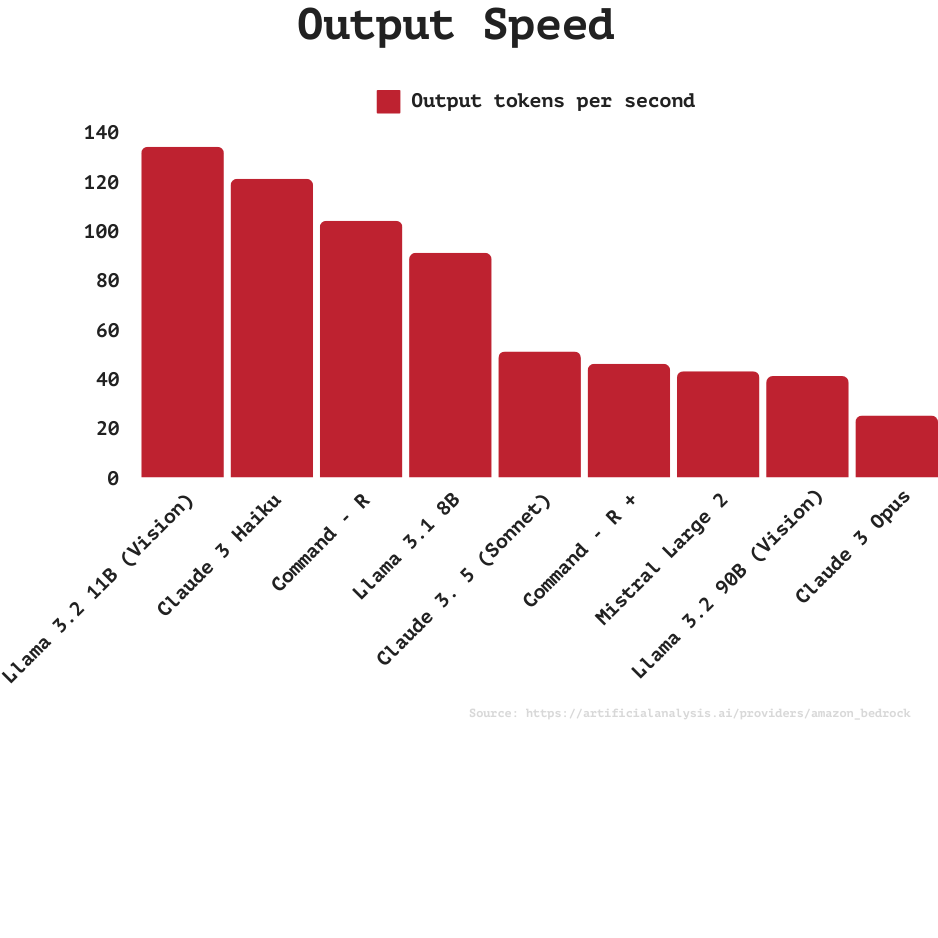
Output speed is all about how fast the model can respond. For real-time applications, like a chatbot or live customer support, a model with a high output speed can mean the difference between a positive or frustrating User experience.
Why It Matters: Users expect fast responses, especially in interactive apps. A slow model can lead to user drop-off and frustration. Fast models are generally more expensive, so it’s important to assess how critical speed is for your application. For non-real-time needs, like reporting, you can opt for a slower, more affordable model.
Here’s another chart comparing speed vs. quality:
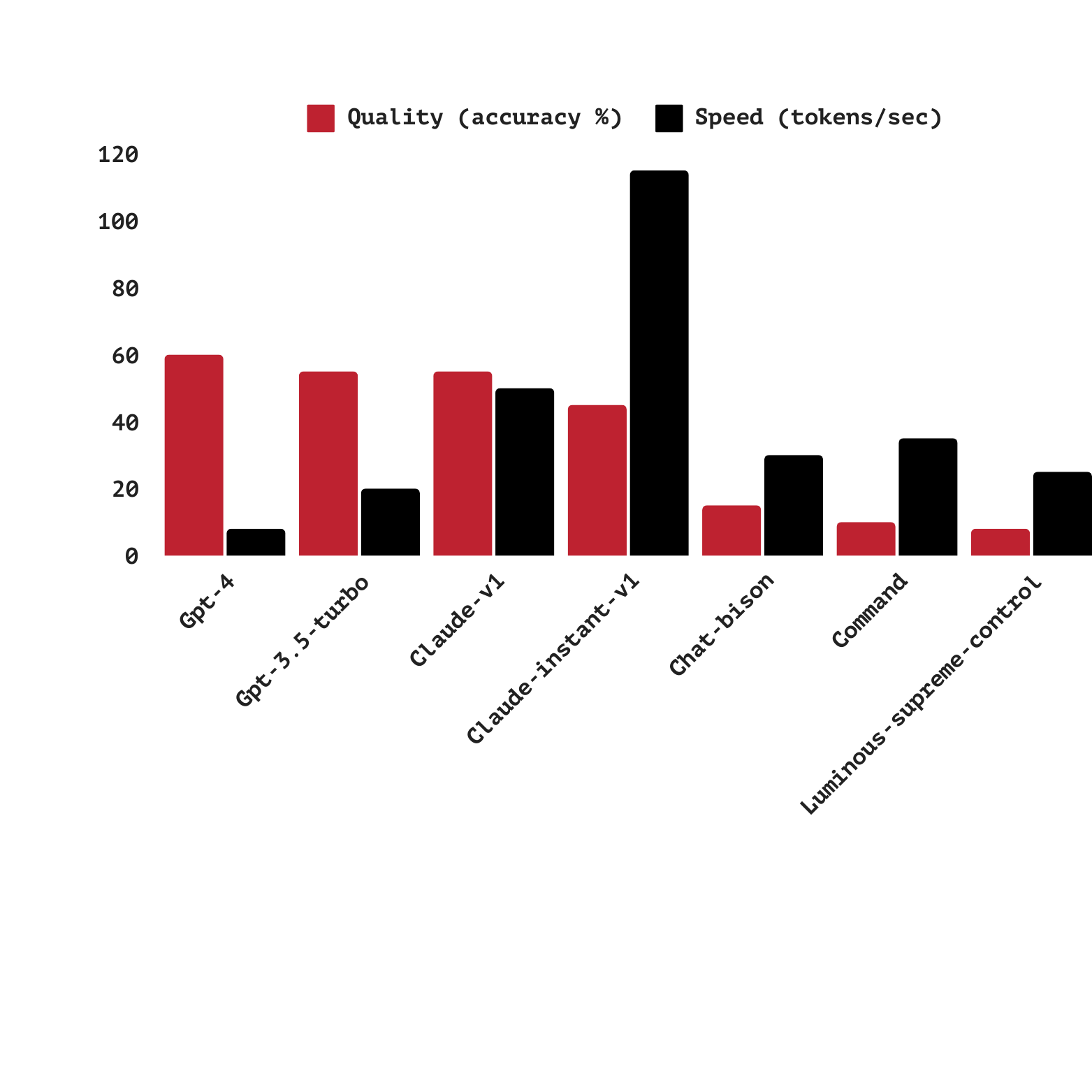
Devika typically uses Claude v1-Instant for text generation use cases, as speed and minimising costs are critical factors. This means something like GPT-4, whilst widely used as a consumer product, wouldn’t meet the requirements for software development from a speed and cost perspective.
In summary, there are a huge range of AI services available for startups and organisations to leverage in their digital solutions. Amazon Bedrock provides a single API (connection point) to many services, which allows for easier integration and development over time. Benchmarks make it easier to see the pros and cons of each AI service, and which will be most suited to a particular project.
To learn more about AI benchmarks and which model is right for your digital product, contact us.